
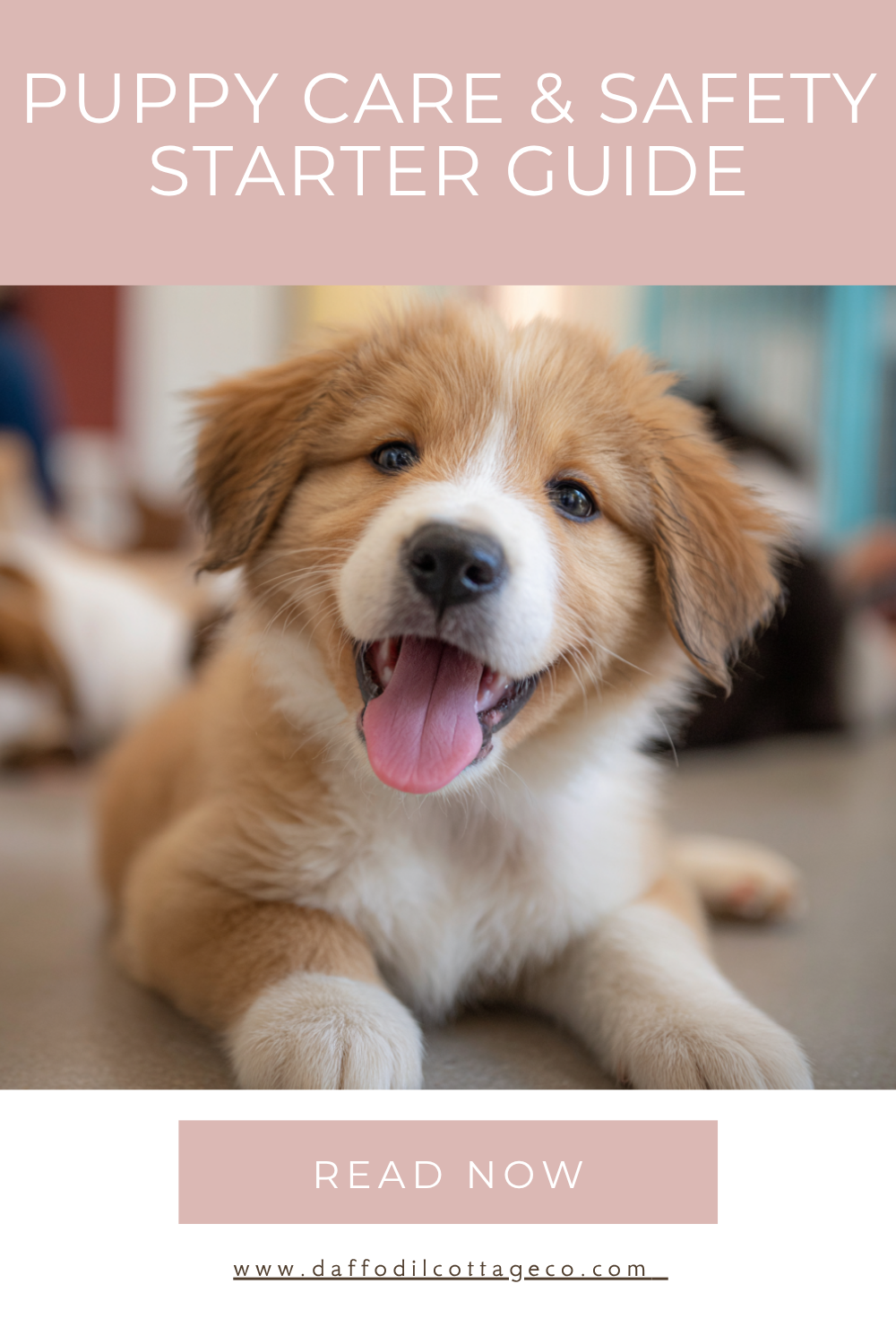
There’s a very specific moment that happens when you bring a puppy home.
It’s usually somewhere between “oh my god they’re perfect” and “why are they biting my ankles and peeing on the rug.”
You’ve probably found yourself wondering:
- Is this normal?
- Am I doing this right?
- Why is this so chaotic already?
Let me just say, gently and honestly, it is completely normal.
Bringing home a puppy isn’t about doing everything perfectly.
It’s about having a simple, clear plan so you’re not constantly second guessing yourself.
The First 24 Hours Matter More Than You Think
Your puppy has just left everything they’ve ever known.
New smells. New people. New sounds. New rules.
It’s a lot.
So instead of trying to do everything, your job is actually quite simple:
- Keep things calm
- Keep things predictable
- Keep things low pressure
No big introductions.
No overwhelming outings.
No “let’s show them everything at once.”
Just… let them settle.
Take them straight to their potty area when you get home. Use the same spot each time. Keep your energy calm.
It’s not about excitement right now.
It’s about safety and stability.
The First Night (A Reality Check)
The first night can feel a bit… humbling.
You may have:
- whining
- restlessness
- a puppy who is very confused about where their siblings went
This is normal.
A few things that actually help:
- Keep the crate near your bed
- Make it cozy (soft blanket, familiar comfort)
- Keep nighttime potty breaks quick and boring
No big interactions. No play. Just out and back.
And if they whine? Give them a moment. Let them try to settle.
This phase passes faster than it feels—promise.
The First 30 Days: What’s Actually Normal
This is the part no one really tells you clearly enough.
In the first month, you can expect:
- accidents in the house
- biting and chewing
- lots of sleep (with random bursts of chaos)
- a very short attention span
- some whining or restlessness
And yes—feeling overwhelmed at times.
None of this means you’re failing.
It just means your puppy is… a puppy.
Your goal during this phase isn’t perfection.
It’s:
- building trust
- creating a routine
- introducing simple structure
That’s it.
A Simple Plan (Because You Shouldn’t Have to Guess)
One of the biggest things that helps? Knowing what to focus on each week.
Instead of trying to do everything at once:
Week 1
→ Calm environment, bonding, routine
Week 2
→ Consistent potty schedule, predictable rhythm
Week 3
→ Name recognition, simple cues, short sessions
Week 4
→ Real-life practice, short walks, gentle exposure
No pressure. No rushing.
Just steady, simple progress.
Puppies Thrive on Routine (Even If You Don’t Yet)
Puppies don’t need a complicated schedule. They need a predictable one.
Think in simple cycles:
- potty
- rest
- short play
- repeat
Whether you’re home all day or working outside the home, structure is what helps everything else fall into place.
And honestly? It helps you feel more in control too.
Sleep Is Not Optional (For Them or You)
Puppies need a lot of sleep. Like… a surprising amount.
We’re talking 16–20 hours a day.
And when they don’t get it?
You’ll usually see:
- more biting
- more barking
- difficulty settling
It’s not bad behavior. It’s an overtired puppy.
Scheduling rest (instead of waiting for them to crash) changes everything.
Safety First (Always)
Before anything else—before training, before adventures—your puppy needs to be safe.
In the early weeks:
- avoid public spaces
- avoid unknown dogs
- keep their world small and controlled
As they grow, you slowly expand that world.
Not all at once. Not rushed.
Just one step at a time.
Your Home Needs a Quick Puppy Reality Check
If they can reach it… they will try it.
That’s just how puppies explore the world.
So:
- remove hazards
- keep food, meds, and cleaners out of reach
- block off unsafe areas
- use a crate or playpen when you can’t supervise
Start small, and gradually give more freedom as they make good choices.
If things go sideways? You simply scale back and reset.
No drama needed.
A Quick Note on Things That Are Not Puppy-Friendly
There are a few everyday things that are genuinely dangerous:
- chocolate
- grapes & raisins
- onions & garlic
- xylitol (in gum, candy, some peanut butters)
- medications and cleaning products
And if something ever feels off—vomiting, shaking, unusual behavior—it’s always better to act quickly.
Feeding Doesn’t Need to Be Complicated
You don’t need the “perfect” system.
You need:
- consistent feeding times
- good quality food
- simple setup
A balanced diet supports:
- growth
- digestion
- energy
- overall health
And like everything else—consistency matters more than perfection.
The Bigger Picture
Here’s the part I want you to remember most:
You don’t need to know everything. You don’t need to get everything right.
You just need:
- a clear plan
- a calm approach
- and a bit of patience
Your puppy isn’t expecting perfection. They’re just learning how the world works—with you.
If You Want a Clear, Step-by-Step Plan
If you’re reading this and thinking, “okay… but I still want something that tells me exactly what to do,”
I created a Puppy Care & Safety Starter Guide that walks you through:
- the first 24 hours
- the first night
- the first 30 days
- daily routines
- sleep, safety, and setup
It’s simple, structured, and designed to take the guesswork out of those early weeks.
You can find it here:
👉 Shop on Daffodil Cottage (Website)
It’s available as an instant download, so you can start using it right away—whether you prefer printing it out or keeping it on your phone or tablet.
Final Thought
You’re not behind.
You’re not doing it wrong.
You’re just in the early days.
And those early days? They’re messy, a little chaotic… and quietly very special.
Related Blog Posts You May Enjoy
If you’d like to keep learning and building a calm, confident foundation for your puppy, here are a few gentle reads to explore next:
- Crate Training a Puppy: The Reality, the Tips, and Why Your Puppy Isn’t Broken
- So… What Shouldn’t You Feed Your Dog? (And What Actually IS Good These Days)
- Teach Your High-Energy Dog to Chill and Relax
- Best Dog Toys and Chews: Safe, Durable, and Eco-Friendly Picks
- The Ultimate Guide to Probiotics & Gut Health for Dogs: What Works, What’s Safe, and What to Avoid
More content is always being added at Daffodil Cottage—check back anytime 🌼
Related Daffodil Cottage Designs
Each design follows the same calm, structured approach—simple, realistic, and easy to stick with.
Follow Daffodil Cottage
Your support truly means the world to me. This little space is growing slowly and intentionally, and I’m so glad you’re here.
If you’d like to stay connected and never miss a new post, guide, or idea:
👉 Subscribe to the Daffodil Cottage Newsletter
👉 Follow along
Pinterest: Daffodil Cottage
Facebook: Daffodil Cottage
Instagram: daffodilcottageco