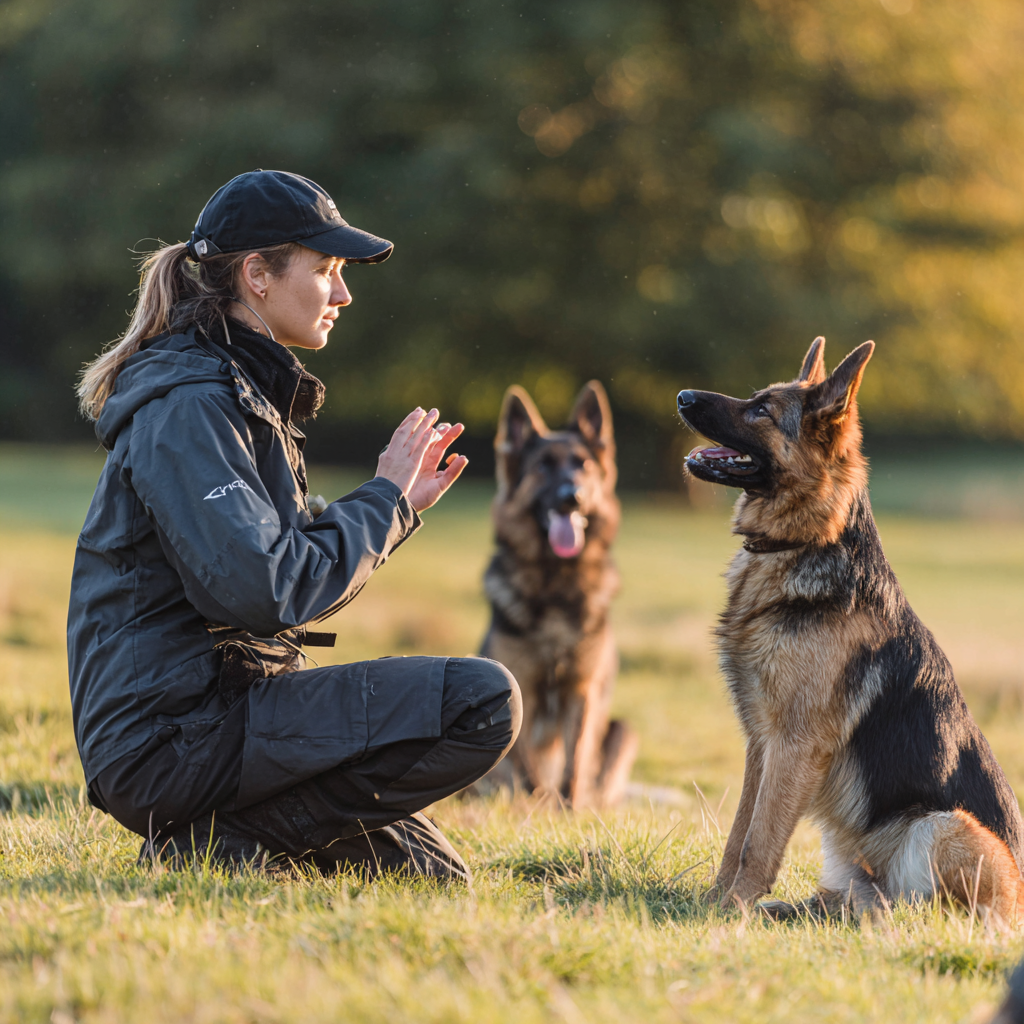
Before We Begin…
This post is not short — and that’s intentional.
Dog–dog aggression is one of those topics that can’t be reduced to a few tips or a quick checklist. It lives at the intersection of neuroscience, learning theory, emotional safety, real-life logistics, and the very human experience of loving a dog who is struggling.
In this guide, we’ll move through the full picture together:
-
what dog–dog aggression actually is (and what it isn’t)
-
how to read early body language and stress signals
-
what’s happening in the brain when dogs react
-
the most common causes behind aggressive behavior
-
why management matters (and why avoidance alone can backfire)
-
what science-based training really looks like in the real world
-
how tools like muzzles, medication, and professional support fit in
-
how biological factors like neutering and spaying play a role
-
how confidence-building outlets like agility and structured exercise support emotional regulation
-
and all the different ways you can support a dog who’s struggling
This isn’t about “fixing” your dog.
It’s about understanding them, supporting their nervous system, and building safety from the inside out.
So take what you need. Skim, pause, come back later.
You don’t have to hold all of this at once. We’ll walk through it together. 🌿
Dog-dog aggression is one of the most misunderstood, emotionally charged, and mismanaged behavior issues in the dog world. It can quietly limit your life, strain relationships, and leave you feeling like you’re constantly bracing for the next incident.
There’s nothing quite like the sinking feeling of seeing your dog stiffen when another dog appears. Their body tightens. Their ears change. Maybe there’s a low growl… and then, suddenly, a lunge that seems to come out of nowhere.
Dog-dog aggression is one of the most stressful challenges a dog guardian can face. It’s isolating, exhausting, and often wrapped in shame that doesn’t belong to you or your dog. The good news is this: aggression is not a moral failure. It is not stubbornness. It is not dominance. It is information.
Aggression is not a personality trait. It’s a behavior, and behaviors can change.
Let’s gently unpack what dog-dog aggression really is, why it happens, and what actually helps dogs feel safer, calmer, and more capable around other dogs.
This guide exists for one reason only: to replace fear, myths, and blame with clarity, science, and practical hope.
Reactivity vs. Aggression (The Most Important Distinction)
These two terms are often used interchangeably, but they’re not the same.
Reactivity is an emotional overreaction to a stimulus, often rooted in fear, frustration, or a lack of impulse control. Reactive dogs may bark, lunge, spin, or growl because their nervous system is overwhelmed. They can appear explosive, but underneath that intensity is usually fear, frustration, or overstimulation. Most reactive dogs aren’t trying to engage, fight, or dominate. They’re trying to make the trigger go away.
At its core, reactivity is driven by poor impulse control combined with big emotions that spill over faster than the dog can regulate.
Aggression, on the other hand, involves intentional threat behavior designed to stop or repel another dog. It is behavior meant to increase distance or end a perceived threat. This can include snapping, biting, or deliberate attempts to drive another dog away.
Aggressive behavior often escalates faster than reactivity and may include bites. In many cases, it is rooted in fear, pain, or learned success. When aggression has worked in the past and the other dog has backed off, the brain stores that outcome, making the behavior more likely to appear again.
Over time, the dog may escalate more quickly because experience has taught them that aggression is effective. This is what trainers mean when they say aggression can become rehearsed. It is learned through repetition, not choice or malice.
Here’s the important (and hopeful) part: many dogs labeled “aggressive” are actually reactive. And both can be improved with the right approach.
What Dog–Dog Aggression Looks Like (And Why It Rarely Comes First)
Aggression rarely comes out of nowhere. Dogs communicate discomfort long before teeth are involved, using body language that shifts as stress increases.
Early Stress Signals
Subtle signs that a dog is becoming uncomfortable:
- Lip licking
- Yawning
- Turning the head away
- Sniffing the ground
- Slow blinking
- Lowered posture
- Tucked tail
Escalating Signals
When the dog feels less safe and pressure builds:
- Freezing
- Hard eye contact
- Whale eye
- Raised hackles
- Growling or snarling
Crisis Behaviors
Last-resort behaviors when earlier communication has failed:
- Snapping
- Lunging
- Biting (with or without injury)
Dog–dog aggression is any behavior a dog uses to increase distance from another dog through threat, intimidation, or physical force. Its purpose is safety, not malice. Aggression is best understood as a stress response, not a personality trait.
Learning to notice early stress signals is one of the most powerful tools you can have. These behaviors are your dog’s way of communicating discomfort before the situation escalates. When we respond early by creating distance, changing the environment, or supporting regulation, we prevent the need for more intense behaviors.
Punishing warning signs does the opposite. It removes communication without removing stress, making it more likely that a dog will bypass subtle signals and move straight to snapping or biting. The discomfort doesn’t disappear; it simply goes underground.
This is where positive reinforcement matters most. When a dog shows early signs of stress and we respond by increasing safety, offering guidance, or reinforcing calm choices, we teach them that communication works and that escalation isn’t necessary.
By rewarding calm behavior, honoring early communication, and removing pressure before a dog reaches their limit, we build trust and emotional safety. A dog who feels heard doesn’t need to shout. A dog who feels safe doesn’t need to escalate.
The Neuroscience of Aggression (Why Dogs Explode)
Dogs are not born aggressive. In most cases, aggression develops when a dog feels unsafe, confused, overstimulated, or repeatedly pushed past their comfort zone. At a neurological level, aggressive behavior is not a “choice” so much as a stress response driven by the brain’s survival system.
When a dog perceives a threat, the brain shifts out of learning mode and into protection mode. The amygdala, which processes fear and danger, becomes highly active. Stress hormones like cortisol flood the body, adrenaline spikes, and the parts of the brain responsible for reasoning and impulse control go offline. In this state, the dog is operating on instinct, not logic.
A dog in this state cannot learn. Their nervous system is focused on survival, not communication or problem-solving.
Common Causes of Dog–Dog Aggression
While the brain response looks similar across dogs, the reasons that trigger it can vary widely. Two dogs can show the same aggressive behavior for completely different reasons — fear, poor socialization, over-arousal, resource guarding, or learned bullying patterns. Understanding the motivation behind the behavior is what determines the training plan.
Some of the most common contributors include:
1. Fear-Based Aggression (Extremely Common)
- Rooted in perceived threat
- Often linked to poor socialization
- Intensifies when escape feels impossible
- Past frightening experiences
Fear-driven aggression often looks intense because fear itself is intense.
2. Poor Socialization Aggression
- Dogs lack canine communication skills
- Misread play vs. threat
- Often escalate quickly
3. Territorial Aggression
- Triggered near home, yard, car, or routine routes
- Reinforced by fence running and window barking
4. Resource Guarding
- Protecting food, toys, people, beds, or space
- May involve “sibling rivalry”
- Can stem from instinct, early competition, or insecurity
5. Pain-Related Aggression (Very Common, Often Missed)
- Arthritis or hip dysplasia
- Dental pain
- Thyroid imbalance
- UTIs or infections
- Chronic discomfort
A dog in pain has a much lower tolerance for stress and proximity.
6. Predatory Drift
- High arousal combined with movement
- Loss of social inhibition
- Common in size mismatches or chaotic play
7. Hormonal or Sexual Competition
- Most common in intact males
- Linked to testosterone-driven behaviors
8. Learned Aggression
- Aggression worked in the past
- Other dogs backed off
- The behavior was reinforced
9. Maternal Aggression
- Protective response around puppies
- Normal, temporary, and powerful
10. Punishment-Induced Aggression
- Fear of correction
- Anticipatory stress
- Suppressed warning signals
What Behavior Science Teaches Us
Much of what modern trainers understand about dog–dog aggression comes from applied behavior science and decades of practical observation. Well-regarded professional literature emphasizes that aggression is not mysterious or unpredictable when we take the time to analyze patterns.
Key principles include identifying the underlying motivation for the behavior, setting realistic expectations for improvement, and using structured, gradual exposure rather than flooding or forced interactions. Calm, socially skilled helper dogs, careful management of distance, and teaching dogs how to tolerate proximity safely all play an important role.
Another critical insight is that many dogs do not struggle because they “hate” other dogs, but because they are sensitive to proximity. Learning to exist calmly near other dogs often comes before any attempt at direct interaction. For many dogs, the real goal isn’t friendship — it’s tolerance. Calm coexistence is the foundation.
For many dogs, neutrality comes first. Friendship, if it happens at all, comes later.
Why “Just Keeping Them Away” Can Make Things Worse
It’s tempting to avoid all other dogs forever, but long-term isolation can actually increase aggression. Dogs need safe, controlled learning experiences — not forced interactions or total avoidance. The goal isn’t social butterfly energy; it’s emotional neutrality and safety. Effective socialization is structured, not chaotic. It relies on calm helper dogs, controlled exposure, and teaching skills like disengaging, turn-taking, and recovering from arousal — not random dog park interactions or forced play.
Management prevents rehearsal. Rehearsal strengthens neural pathways. Each time aggressive behavior successfully creates space or relief, the brain learns that the strategy works, making it more likely to appear again.
Management includes:
- Avoiding dog parks
- Creating distance from unknown dogs
- Using visual barriers
- Practicing leash skills
- Choosing quieter walking routes
- Selecting safer environments
- Using equipment that prevents injury
Management creates space for learning. It’s not giving up. It’s creating the conditions necessary for change.
What Actually Helps: Science-Based Training That Works
Effective dog–dog aggression training focuses on changing how your dog feels, not just stopping behavior in the moment.
1. Safety & Management Come First
Before behavior change can happen, everyone needs to stay safe.
- Use sturdy leashes and well-fitted harnesses
- Avoid dog parks and chaotic environments
- Create distance with barriers, parked cars, or visual blocks
- Prevent rehearsing aggressive behavior
Management isn’t failure; it’s compassion.
2. Identify Triggers
Not all dogs trigger your dog equally.
Is it:
- Dogs staring?
- Dogs rushing up?
- Large dogs? Small dogs?
- On-leash greetings?
Clarity here guides everything else.
3. Find the Threshold
The threshold is the distance at which your dog can notice another dog without reacting. This is where learning happens.
4. Desensitization & Counterconditioning (DSCC)
This gold-standard method pairs the presence of another dog with positive experiences at a safe distance. Over time, the emotional response shifts from fear or tension to neutrality and calm.
5. Positive Reinforcement
Calm behaviors get reinforced generously.
We reward:
- Soft body language
- Checking in with you
- Looking at another dog calmly
This builds confidence and trust.
6. Teach Incompatible Behaviors
Meaning: Teaching a behavior that cannot physically occur at the same time as the unwanted behavior.
Instead of lunging, we teach dogs what to do instead:
- Go to a mat
- Look at you
- Sniff the ground
- Move behind you
Behavior change beats behavior suppression every time.
7. Avoid Punishment
Harsh corrections, prong collars, choke chains, shock collars, and yelling may interrupt behavior in the moment, but they do not address the underlying emotion driving aggression. Instead, punishment increases fear and anxiety, suppresses communication, and often creates additional fallout behaviors.
Punishment:
- Increases fear
- Suppresses warning signals
- Does not change emotional state
- Can escalate aggression over time
When early warning signs are punished, dogs don’t feel safer — they simply learn to stop communicating. The stress remains, and the dog may skip subtle signals and move straight to snapping or biting because those behaviors haven’t been suppressed yet. The outward behavior may look “improved,” but internally the emotional trigger is intensifying.
Safety Note (Important): If your dog has a bite history, redirects onto the leash/handler, or has caused injury, work with a qualified professional and use management tools like muzzle training (done positively) to keep everyone safe while training.
How the Training Process Works (Big Picture)
Before working near other dogs, foundational skills are taught in calm environments. A clicker or marker is paired with high-value food so the dog clearly understands when they’ve made a good choice. Verbal cues like “Look,” “Let’s go,” “Find it,” and “Touch” are practiced alongside physical cues such as turning the body away, moving in arcs, or offering a hand target.
Once these skills are fluent, training begins at a safe distance from other dogs (the threshold), where the dog can notice another dog without escalating.
At this distance, the appearance of another dog is consistently paired with a marker and reward. Over time, the emotional response shifts. Other dogs stop predicting danger and begin predicting safety.
As progress develops, incompatible behaviors are reinforced—looking away, checking in, sniffing, or moving behind the handler replace staring, freezing, or lunging. Distance is reduced gradually and only when the dog shows consistent emotional regulation.
Step-by-Step Training Plan
(Cues + Clicker + Reinforcer)
This framework is designed to change how your dog feels around other dogs, not just what they do. Every step builds emotional safety, predictability, and communication.
What You’ll Need
Marker:
A clicker. This will be your primary marker for all training.
Quick note: In situations involving other dogs, timing matters. A clicker gives you a clear, consistent marker that cuts through distraction and emotion better than a voice cue. It lets you mark the exact moment your dog makes a good choice, whether that’s a soft glance, a pause, or choosing to disengage.
For dogs working through reactivity or aggression, a clicker removes ambiguity. The sound is always the same and isn’t influenced by stress or tone, which helps dogs understand exactly which behavior earned the reward, even under pressure. Over time, the click itself becomes reassuring.
When seeing another dog reliably leads to a click and a positive outcome, your dog’s emotional response begins to shift. Other dogs stop feeling like a threat and start feeling predictable and manageable.
👉 Click here for a simple step-by-step guide to introducing a clicker.
Reinforcers:
High-value, soft treats (cheese, hot dog, fish, meat-based treats), plus optional reinforcers like sniffing or play for dogs who stay regulated.
Equipment: Some links in this post are affiliate links, which help support this blog at no extra cost to you.
- Front-clip harness
- Sturdy leather leash
- Muzzle if there is any bite risk (positively conditioned)
- Treat Pouch
- High-value treat
- Clicker
A U-turn plan:
Your exit strategy matters more than “holding your ground.” Always know where you can move to create space.
👉 Click here to view a sample training session script (minute-by-minute guide).
Your Core Cues (Keep These Consistent)
Verbal Cues
- “Look” – eye contact
- “Let’s go” – U-turn / move away
- “Find it” – scatter search
- “Behind” – move behind your legs
- “Touch” – nose to hand target
Physical Cues (Your Body Matters)
- Turn shoulders away from the trigger
- Move in gentle arcs, not straight lines
- Step between your dog and the trigger when needed
- Keep leash loose (no tension signaling danger)
Phase 1: Teach Skills at Home (No Triggers Yet)
You’re building automatic responses before you ever need them in real life.
1. Load the Clicker
This teaches your dog that the click predicts good things.
- Click
- Immediately give a treat
- Repeat 10–15 times, 2–3 short sessions
Goal: Your dog hears the click and expects something positive.
2. Teach “Touch” (Hand Target)
Your steering wheel.
Cue: “Touch”
Physical cue: Open palm, fingers together, 2–4 inches from nose
Steps:
- Present your hand
- When your dog boops it → click
- Treat
- Add the word “Touch” right before your hand appears
Why it helps: Redirects focus without conflict and gives your dog a simple job.
3. Teach “Find It” (Sniff Reset)
Your nervous system off-switch.
Cue: “Find it”
Physical cue: Toss 3–6 treats on the ground
Steps:
- Say “Find it”
- Scatter treats at your feet
- Let your dog sniff and eat
- Repeat until automatic
Why it helps: Sniffing lowers arousal and breaks fixation.
4. Teach “Let’s Go” (U-Turn)
Your clean exit.
Cue: “Let’s go”
Physical cue: Turn body and move briskly the other way
Steps:
- Say “Let’s go”
- Turn and walk away
- When your dog follows → click
- Treat while moving or right after
Goal: This becomes a happy cue, not a panic response.
Phase 2: Train Around Dogs at a Safe Distance
(Threshold Work)
This is where real behavior change begins.
Find your dog’s threshold: the distance where they can see another dog and still:
- Stay mostly loose-bodied
- Respond to cues
- Take food
If your dog is stiff, staring, barking, growling, or refusing treats, you’re too close.
Learning only happens below threshold.
Phase 3: “See Dog → Click → Treat” Pattern
(Counterconditioning)
This is the core emotional reconditioning exercise.
Pattern:
Dog appears → click → treat
Steps:
- Your dog notices another dog
- The moment they register it (before tension rises) → click
- Feed 1–3 small treats
- Pause, let them look again
- Repeat
Goal: Other dogs stop predicting danger and start predicting good things.
Reinforcer rule: At training distance, reinforcement should appear every single time the trigger appears.
Phase 4: Add a Calm Replacement Behavior
Once “dogs predict good things” is working, teach what to do instead of escalating.
Option A: “Look” (Check-in)
- Say “Look”
- When eyes meet yours → click
- Treat
Use after your dog glances at the other dog, not as a demand when they’re overwhelmed.
Option B: “Behind” (Safety Position)
- Say “Behind”
- Step forward and sweep hand behind your legs
- When your dog moves behind you → click
- Treat behind you
Why it helps: Reduces pressure and gives your dog a protected position.
Phase 5: When You See Early Stress Signals
This is where your observation skills become real-world protection.
If you notice: stiffening, hard stare, breath-holding, closed mouth, slow creeping
Do this in order:
- Create distance
- Cue: “Let’s go”
- Move away in an arc
- Reset the nervous system
- Cue: “Find it”
- Scatter treats
- Reinforce recovery
- When body softens or dog checks in → click → treat
You are not rewarding aggression.
You are reinforcing regulation and disengagement.
Phase 6: Gradually Reduce Distance
Progress is not “get closer every session.”
Progress looks like:
- Softer body language
- Faster recovery
- Less staring
- Taking food
- Choosing to disengage
When your dog succeeds 80–90% of the time at a distance, you can reduce distance slightly or work with calmer, socially skilled dogs.
Neutrality comes before interaction.
Reinforcer Options
Food is best for emotion change, but you can rotate based on the dog:
- Treats (primary)
- Sniff breaks
- Play (for regulated dogs)
- Brief greetings only if safe and appropriate
What Not to Do
- Don’t force greetings
- Don’t flood by getting close and hoping they adjust
- Don’t punish growling (it removes warnings)
- Don’t keep walking forward if your dog is escalating
- Don’t train this at dog parks
The Big Picture
This entire system is built on three principles:
- Emotional safety comes before behavior.
- Proximity is the real skill most dogs struggle with.
- Communication must stay intact for learning to work.
We are not teaching dogs to “tolerate” stress.
We are teaching them how to exist calmly in the presence of it.
That’s the difference between suppression and real change.
Muzzles: A Training Tool, Not a Label
Muzzles can be an extremely effective and compassionate training tool. Using one does not mean your dog is dangerous, broken, or a “problem dog.” It means you are prioritizing safety and setting up the conditions needed for learning.
When properly fitted and positively conditioned, a basket muzzle allows a dog to pant, drink, take treats, and breathe comfortably. Its purpose isn’t punishment or restraint. It’s prevention.
Prevention matters because it changes the emotional environment of training. When there is a risk of a bite, human stress increases. Leash handling becomes tighter, timing worsens, and tension rises. Dogs notice these shifts immediately. When the possibility of a bite is removed, the human nervous system settles—and that calm transfers directly to the dog.
Lower stress allows the dog’s brain to stay engaged and receptive. Elevated stress hormones interfere with learning, pushing the nervous system into survival mode instead of communication and problem-solving.
Muzzles are not a solution by themselves. They are a bridge. They create safety and space while behavior change work is underway.
Used thoughtfully, a muzzle is not a sign of failure. It’s a sign of responsibility, empathy, and good training practice.
👉 Click here for a gentle, step-by-step guide to introducing a muzzle positively.
Helpful Videos for Positive Muzzle Training
If you’re new to muzzle training, these creators do an excellent job demonstrating how to introduce a muzzle gently and positively:
- The Muzzle Up! Project – Clear, science-based tutorials and advocacy
- Chirag Patel (Domesticated Manners) – Step-by-step cooperative muzzle training
- Kikopup (Emily Larlham) – Calm, reward-based conditioning methods
- Zak George – Beginner-friendly introductions
All of these focus on making the muzzle a neutral or positive experience, not something the dog associates with fear or restraint.
How Agility & Structured Play Support Aggression Recovery
Agility training can be an incredibly powerful support tool for aggressive or reactive dogs — not because it makes them “social,” but because it works directly on the systems that drive aggression in the first place.
At its core, agility helps by:
- building confidence
- improving impulse control
- reducing chronic stress
- giving the nervous system a healthy outlet
Aggression often comes from a dog who feels overwhelmed, unsafe, or unable to cope with stimulation. Agility turns excess energy and emotional tension into a structured, rewarding “game,” where the dog learns to focus on their handler instead of scanning for threats.
In simple terms: If your dog is focused on you, they can’t be focused on reacting to everything else.
Why This Works Behaviorally
Agility supports behavior change in three main ways:
1. Confidence through success
Agility teaches dogs how to succeed. Every obstacle, puzzle, or skill builds problem-solving ability, body awareness, and emotional resilience. Dogs who regularly experience success tend to become more flexible and less reactive in general. Confidence reduces fear — and fear is at the root of most aggression.
2. Impulse control in motion
Many aggressive dogs struggle with arousal regulation. They go from calm to explosive and don’t know how to come back down. Agility teaches dogs how to get excited and then settle again, how to wait, how to listen while moving, and how to stay connected under stimulation. These are the same skills needed around triggers.
3. Stress relief and nervous system regulation
Chronic stress makes aggression worse. Movement, problem-solving, and play help discharge tension and reduce baseline anxiety. A calmer nervous system makes learning possible.
Agility Is Not About Forcing Socialization
This part matters:
Agility does not require dogs to interact with other dogs.
Many aggressive dogs do agility:
- on private fields
- behind visual barriers
- with controlled spacing
- or entirely one-on-one
The benefit comes from confidence, regulation, and focus — not from social exposure.
Can At-Home Agility Help Too?
Yes — absolutely.
You do not need a full agility gym for these benefits.
At-home versions work extremely well:
- parkour-style movement (climbing, balancing, stepping over objects)
- nose work games
- trick training
- recall games
- obstacle courses made with household items or bought agility equipment
The emotional benefits come from:
- mental challenge
- physical movement
- predictable structure
- positive success experiences
Not the equipment itself.
For many dogs, home-based agility and enrichment are just as effective as classes, especially when a dog is not yet comfortable training around others.
How This Fits Into Aggression Training
Agility is not a replacement for behavior modification, professional guidance, or (when needed) medication. But it is a powerful adjunct that often speeds progress and improves emotional stability.
It supports the same core goals as behavior work:
- emotional regulation
- confidence under pressure
- impulse control
- resilience to stress
- strengthening the human–dog bond
In other words, it helps build the internal skills that make aggression recovery possible.
Agility gives aggressive dogs something they often lack: a safe way to feel powerful, successful, and in control of their own bodies.
That internal shift — from fragile to capable — is one of the most overlooked parts of real behavior change.
Important Safety Note
Agility should never be done with dogs who have untreated pain or orthopedic issues. A basic veterinary exam is important before starting any structured physical training.
And all agility should be:
- positive
- pressure-free
- focused on fun
- never force-based
Neutering, Spaying, and Aggression
Neutering and spaying can influence behavior, but they are not a magic fix for aggression. They work best as part of a bigger plan that includes training, management, and emotional support.
Why Neutering or Spaying Can Help
Hormones play a role in behavior. In male dogs, testosterone is linked to:
- Roaming
- Marking
- Sexual behaviors
- Some types of male–male competition
In some dogs — especially intact males who show aggression toward other dogs — neutering can reduce these hormone-driven behaviors and lower the risk of escalation.
Spaying removes reproductive hormones in female dogs and can reduce stress during heat cycles and some hormone-related reactivity.
Because of this, many veterinarians and behavior professionals consider it a responsible choice to spay or neuter dogs who are showing signs of aggression — particularly when hormones appear to be contributing to the behavior.
What the Research Actually Shows
Scientific research on neutering and spaying shows mixed but useful results.
Multiple studies have found that neutering can reduce certain types of aggression, especially those linked to sexual behavior and competition between intact males. In some populations, inter-dog aggression decreased significantly after neutering.
However, other well-designed studies have found no change, and a small number have reported increases in fear or anxiety after early neutering — particularly in dogs who were already sensitive or under-socialized.
Research on spayed females shows similar variability: some dogs become calmer, while others show no behavioral change or mild increases in fear-based responses.
What this tells us is important:
Aggression is influenced by:
- Genetics
- Early socialization
- Learning history
- Environment
- Emotional development
Hormones are only one piece of the puzzle.
The Important Reality
Neutering or spaying is most likely to help with:
- Hormone-driven behaviors
- Sexual competition
- Roaming and territorial issues
It does not reliably fix:
- Fear-based aggression
- Poor socialization
- Learned aggression
- Trauma responses
In some dogs, especially if altered very young, surgery alone may even increase anxiety if emotional development and training are not addressed.
Bottom Line
Spaying or neutering is often a responsible and helpful step, especially for safety, population control, and reducing biological pressures that can fuel aggression.
But meaningful behavior change comes from:
- Training
- Emotional safety
- Management
- Positive reinforcement
Think of neutering or spaying as supportive, not curative.
It may help the body feel calmer — but training is what teaches the brain how to cope.
Or more simply:
Surgery can lower the volume.
Training is what changes the song.
References & Further Reading
Farhoody, P., Mallawaarachchi, I., Tarwater, P. M., Serpell, J. A., & Duffy, D. L. (2018).
Aggression toward familiar people, strangers, and conspecifics in gonadectomized and intact dogs. Frontiers in Veterinary Science, 5, 18.
https://doi.org/10.3389/fvets.2018.00018
Kolkmeyer, K., et al. (2024).
Personality Unleashed: Surveying Correlation of Neuter Status and Social Behaviour in Mixed-Breed Male Dogs across Weight Classes. Animals, 14(16), 2445.
https://doi.org/10.3390/ani14162445
Zapata, I., et al. (2016).
Genetic mapping of canine fear and aggression.
https://pmc.ncbi.nlm.nih.gov/articles/PMC4977763/
All the Ways to Help an Aggressive Dog
There is no single solution to dog–dog aggression. Real progress almost always comes from a combination of behavior modification, emotional safety, management, sometimes medication, and a human who is willing to learn alongside their dog.
This section isn’t about quick fixes. It’s about what actually works in the real world.
The Philosophy Shift That Changes Everything
Most people start with the same question: “How do I stop this behavior?”
But the question that leads to real change is: “What does my dog need to feel safe?”
Aggression doesn’t dissolve through control. It dissolves through safety. Most serious aggression can be prevented through early positive exposure and emotional learning in puppyhood — and prevention is often far easier than rehabilitation.
When dogs feel predictable, supported, and understood, the need to escalate fades naturally. Not because they’re forced into compliance, but because their nervous system no longer believes they’re in danger.
Confidence: The Missing Piece
Confident dogs:
- Communicate earlier
- Recover faster
- Escalate less
Confidence comes from:
- Predictability
- Choice
- A history of success
A confident dog doesn’t need to shout. They trust that their communication will be respected.
This is why aggression training is never just about cues and treats. It’s about rebuilding emotional regulation and trust from the inside out.
When training focuses on emotional safety, it doesn’t just change behavior — it heals relationships. Not through control, but through trust, predictability, and compassion.
And that is what real aggression recovery actually looks like.
Why Professional Help Matters (and the Reality of Cost)
Dog–dog aggression is not a DIY project. You can absolutely learn a lot and make meaningful changes at home, but when safety is involved, professional guidance is often essential.
And I’m not going to sugarcoat it: aggression training is expensive.
What It Usually Costs (Realistic Numbers)
For professionals who truly specialize in behavior:
Certified behavior consultants / advanced trainers
$175–$300+ per session (60–90 minutes)
Veterinary behaviorists (DACVB)
$400–$800+ for an initial consult
$200–$400+ for follow-ups
This pricing reflects:
- Years of advanced education
- Emotional and neurological complexity
- High safety risk
- Individualized case planning
- Ongoing support and reassessment
- Life-saving impact for both dogs and humans
Cheap does not mean good quality in this field — in fact, it often means the opposite. Aggression cases require careful assessment, safety planning, emotional reconditioning, and long-term consistency, and that level of expertise costs more because it has to. Not every case progresses at the same speed, and that’s normal. Progress depends on emotional sensitivity, learning history, safe practice opportunities, and consistency at home.
But when the right professional support meets consistent, compassionate follow-through at home, the results are often genuinely life-changing. Not because the dog is “fixed,” but because the dog finally feels safe enough to learn.
Vet vs Veterinary Behaviorist: What’s the Difference?
Regular Veterinarian
A general vet can:
- Rule out pain or medical causes
- Prescribe medication
- Offer basic behavioral guidance
Veterinary Behaviorist (DACVB)
A veterinary behaviorist:
- Is a board-certified specialist in animal behavior
- Has a medical degree plus years of additional behavioral residency
- Has deep training in neuroscience, pharmacology, learning theory, and emotional disorders
- Designs integrated plans combining medication + training + management
In terms of behavior knowledge, a veterinary behaviorist is the equivalent of a human psychiatrist compared to a general physician.
If your dog:
- Has a bite history
- Redirects onto people or leash
- Cannot take food near triggers
- Shows severe fear or panic
A veterinary behaviorist is absolutely worth the investment.
Medication: When Training Alone Isn’t Enough
Some dogs are so overwhelmed that learning simply isn’t possible at first. Their nervous system is in constant survival mode, making behavior change extremely difficult.
This is where medication can be transformative.
Medication does not sedate dogs into submission. It lowers the emotional “volume” so learning can actually occur.
Common Medications Used in Aggression Cases
Long-term emotional regulation:
- Fluoxetine (Prozac)
- Sertraline (Zoloft)
- Paroxetine (Paxil)
- Clomipramine (Clomicalm)
These help reduce baseline anxiety, fear, and hyperarousal.
Short-term situational support:
- Trazodone
- Gabapentin
- Clonidine
These help during training sessions, vet visits, transitions, or particularly stressful situations.
Think of it like this:
Training teaches the brain.
Medication helps the brain stay online long enough to learn.
And just like with humans, medication is rarely meant to be the permanent solution. It’s a support tool, not the end goal. The real work still happens through training, emotional regulation, and building safer coping skills.
For many dogs, medication isn’t a crutch — it’s a bridge.
A More Affordable (and Often Excellent) Alternative
Many professional daycare and training centers now offer:
- Reactivity classes
- Aggression groups
- Structured socialization programs
When done correctly, these programs:
- Use muzzles, barriers, and controlled distance
- Are run by experienced professionals
- Pair dogs with similar challenges
- Focus on emotional regulation, not chaos
A key part of good programs is the use of calm helper dogs. These are socially skilled, emotionally stable dogs selected specifically for training work. They have excellent communication, strong impulse control, and the ability to disengage easily without escalating. Helper dogs model appropriate behavior and provide predictable, low-pressure interactions for dogs who are still learning.
Good programs often include:
- Parallel walking
- Gradual proximity work
- Calm helper dogs
- Visual barriers
- Positively conditioned muzzles
These group formats are often far more affordable than private training and can be incredibly effective when properly structured and professionally managed.
Can Pet Insurance or Financial Support Help?
Sometimes, yes.
While most pet insurance does not cover training itself, some policies do cover veterinary behaviorists and behavioral medications — especially when the dog is formally diagnosed with an anxiety or behavioral disorder and treatment is prescribed by a licensed veterinarian or veterinary behaviorist.
Pet insurance companies that are known to sometimes cover veterinary behavior services include:
Coverage varies widely by policy, so it’s always worth checking your plan details or calling directly. Even partial reimbursement can make a significant difference when working with a behavior specialist.
There are also organizations that may help with financial support for medical or behavioral care:
- The Pet Fund
- RedRover Relief
- Frankie’s Friends
- Brown Dog Foundation
- Harley’s Hope Foundation
- Instinct’s Every Dog Fund
- University veterinary teaching hospitals
- Local humane societies and rescue groups
Additionally, many trainers offer:
- Payment plans
- Sliding scale rates
- Group program discounts
If cost is a barrier, it’s worth asking about options. Support exists — and sometimes it’s more accessible than people expect.
Reputable Books & YouTube Resources
Books
- Fight! – Jean Donaldson
- Behavior Adjustment Training (BAT) – Grisha Stewart
- Click to Calm – Emma Parsons
- The Cautious Canine – Patricia McConnell
- Clinical Behavioral Medicine for Dogs and Cats – Karen Overall
YouTube Channels
The Truth That Makes Everything Work
Dog trainers are not magicians. No matter how skilled the professional, real progress still depends on what happens day to day.
You still have to:
- Practice
- Manage
- Show up
- Stay consistent
The trainer guides the process. You do the work. And that’s not a flaw — that’s empowerment.
Aggressive dogs are not broken or bad. They are dogs under pressure whose nervous systems learned that escalation was necessary to feel safe. When we shift from “How do I stop this?” to “How do I help my dog feel safer?” everything changes. The goal stops being control and starts being understanding.
And let’s be honest — this work is hard. It’s emotional, exhausting, and sometimes heartbreaking. It’s okay to have a good cry about it. You love your dog. You didn’t expect this. And it’s a lot to carry.
Let yourself feel it.
Then, when you’re ready, put on your big-person pants and get to work. Not with fear or force, but with patience, science, and compassion. You can do this.
With the right support and consistent effort, change is absolutely possible. Not overnight, not perfectly — but gradually and meaningfully.
Sunlight returns. Walks feel possible again. And trust grows, one calm moment at a time. 🌼
Related Blog Posts You May Enjoy
If you’d like to keep learning, exploring, and supporting your dog with gentle, science-backed care, here are a few reader favorites from the blog:
- Why Positive Reinforcement Is the Gold Standard in Dog Training
- Teach Your High-Energy Dog to Chill and Relax
- The Gentle Joy of Agility Training for Your Dog
- Teach Your Dog to Come When Called: A Recall Training Guide for Reliable Results
- Beginner’s Guide to Agility Tunnels: Build Confidence, Focus, and Fun
- Building Confidence One Jump at a Time: My Dog Agility Jumps Training Guide
- Teach Your Dog Weave Poles: A Simple Guide With Big Benefits
More content is always being added at Daffodil Cottage—check back anytime!
Related Daffodil Cottage Designs Listings
Looking for easy-to-use training resources? Try!
- Dog Recall Training Guide eBook: Step-by-Step PDF with Progress Tracker
- Dog Agility Jumps Training Guide PDF – Adjustable Jump Exercises, Puppy & Dog Training with Progress Tracker
- Dog Agility Weave Pole Training Guide PDF – Beginner to Advanced Weaving Exercises + Printable Progress Tracker
- Dog Agility Tunnel Training Guide: Beginner-Friendly PDF with Progress Tracker
Each design is created with the same calm, science-based approach you’ll find throughout the blog.
Follow Daffodil Cottage
Your support helps Daffodil Cottage grow, and it truly means the world to me. Thank you for being here. 
If you’d like to stay connected and never miss a new dog-training tip, recipe, enrichment idea, or Etsy design, you can:
- Subscribe to the Daffodil Cottage Newsletter → Click Here
- Follow along on social media:
- Facebook: Daffodil Cottage
- Pinterest: Daffodil Cottage
- Instagram: Coming Soon!