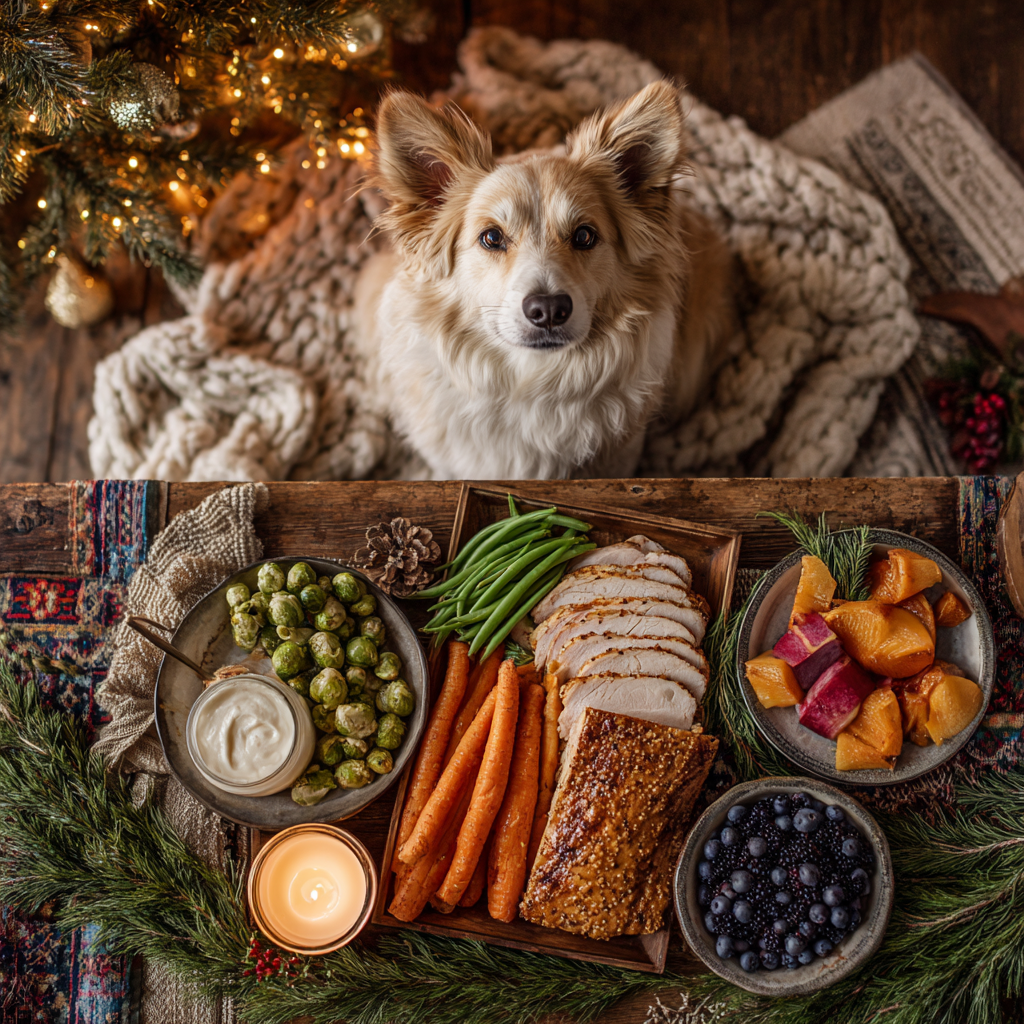
A cozy, easy-to-follow Christmas dog food guide to help you keep your pup safe, calm, and out of the emergency vet this holiday season.
The holidays bring warm kitchens, cinnamon in the air, twinkling lights, and your loyal pup waiting patiently in the kitchen in case a crumb falls from the counter.
But Christmas foods can be surprisingly dangerous for dogs, and veterinary hospitals see a sharp spike in food-related emergencies every December.
This guide shows you exactly what your dog can enjoy (without guilt) and what needs to stay far, far away from those begging puppy eyes.
In this guide, you’ll find:
✨ Safe and unsafe Christmas foods
✨ Hidden holiday hazards people often forget
✨ Leave It, Drop It, Go To Bed, and counter-surfing training
✨ Enrichment ideas to keep your dog calm
✨ Dog gates and pens for added holiday safety
✨ Emergency contacts and poison control hotlines
✨ What to keep in your pet first-aid kit
✨ A gentle, holistic, dog-centered approach to Christmas
Make yourself a cuppa, settle in, and let’s keep your Christmas merry, bright, and completely dog safe.
Safe Christmas Foods for Dogs: What Dogs Can Safely Eat on a Holiday Plate
These foods are generally safe for dogs as long as they’re plain, unseasoned, and free of butter, sugar, fats, garlic, or onions, and only given in tiny, sensible portions.
✔️ Plain Turkey Breast (NO skin, NO bones)
Plain white turkey meat is lean, gentle, and safe in small amounts. Avoid the skin because it absorbs butter, oils, and seasonings. Never feed cooked bones, they splinter easily and are dangerous. A few pieces of plain white meat make a perfect holiday treat.
✔️ Plain Vegetables
Carrots, peas, green beans, broccoli, and small amounts of Brussels sprouts are all dog-safe vegetables when served plain. Offer them steamed or boiled with no butter, oils, or seasoning. Cruciferous veggies may cause gas, so keep portions small.
✔️ Plain Mashed Sweet Potato
A teaspoon or two of plain sweet potato is a lovely treat. Avoid candied versions with brown sugar or marshmallows. The plain version offers gentle fiber and warmth for sensitive stomachs.
✔️ Plain Pumpkin (not pie filling)
Plain canned pumpkin supports digestion and calms nervous bellies. Choose pure pumpkin only, pumpkin pie filling contains sugar and spices that aren’t safe.
✔️ Apple or Pear Slices (no seeds, no core)
Apples and pears make a crisp, festive snack. Remove seeds and the core before offering. Avoid slices coated in sugar, glazes, or spices.
✔️ Plain Bread or a Simple Dinner Roll
Bread is safe for most dogs in tiny amounts but not nutritious. Offer only plain bread and avoid rolls containing garlic, herbs, cheese, or oils.
✔️ Plain Yogurt
Plain, unsweetened yogurt (including Greek yogurt) is safe in small portions. Avoid flavored varieties or anything containing xylitol, added sugar, or mix-ins.
✔️ Dog-Safe Berries
Blueberries, strawberries (cut small), blackberries, and tiny amounts of cranberries and raspberries are safe for dogs. Keep portions small due to natural sugars.
✨ Want Even More Dog-Safe Holiday Goodies? Explore My Homemade Christmas Dog Treats Post ✨
If you’d love to treat your pup to something festive and safe this season, make sure to check out my companion post: Homemade Christmas Dog Treats: Easy Festive Recipes Your Pup Will Love.
Inside the post, you’ll find four homemade holiday treats made from wholesome, dog-safe ingredients:
1. Gingerbread Christmas Dog Treats
Pumpkin, peanut butter, cinnamon, ginger, and blackstrap molasses come together to create a dog-safe gingerbread biscuit. Roll it out, grab your festive cookie cutters, and bake the cutest little Christmas shapes.
2. Apple & Cinnamon Snowflake Treats
A simple three-ingredient dough—oats, applesauce, and an egg—lightly flavored with cinnamon. Roll, cut into wintery shapes, and bake until golden.
3. Honey, Oat & Cinnamon Reindeer Bites
Lightly sweetened with applesauce and a drizzle of honey, these oat-based treats hold beautifully in reindeer, tree, and star molds. They make adorable stocking stuffers for pups.
4. Frozen Yogurt + Blueberry Christmas Tree Treats
A creamy blend of banana and Greek yogurt poured into Christmas tree molds, finished with blueberry “ornaments.” A refreshing, festive frozen treat.
These recipes are perfect for Christmas Eve baking traditions, holiday gifting, training treats, or simply giving your dog something special to enjoy while the humans tuck into Christmas dinner.
👉 Read the full post here: Homemade Christmas Dog Treats: Easy Festive Recipes Your Pup Will Love.
UNSAFE Christmas Foods for Dogs
These foods are the major holiday “nope” culprits and account for a large portion of Christmas emergency vet visits.
🚫 Turkey Skin, Drippings, and Fat Trimmings
These are the number one cause of pancreatitis in dogs during the holidays. Even a small taste can trigger severe inflammation. Avoid all fatty trimmings, drippings, and crispy skin.
🚫 Onions, Garlic, Leeks, and Shallots
These ingredients can damage a dog’s red blood cells and lead to anemia. Even powdered forms are unsafe.
🚫 Stuffing and Gravy
Stuffing and gravy almost always contain onions, garlic, herbs, fats, and heavy seasoning. Even small amounts can cause serious digestive upset.
🚫 Chocolate (all types)
All forms of chocolate are dangerous. Dark chocolate and cocoa powder contain extremely high theobromine levels. Even white chocolate can cause stomach upset. Contact your vet immediately if your dog eats chocolate of any kind.
🚫 Grapes, Raisins, Mince Pies, Fruit Cake, Christmas Puddings, and Panettone
These often contain raisins, alcohol, spices, suet, currants, or sultanas.
Even a single raisin can trigger sudden kidney failure.
🚫 Anything Sugar-Free (Xylitol)
Xylitol causes rapid, life-threatening drops in blood sugar. It is found in gum, baked goods, candies, some peanut butters, and “healthy” snacks. This sweetener is extremely dangerous and fast-acting.
🚫 Ham, Sausages, Salami, and Pigs in Blankets
Very high in fat and salt, these foods can cause pancreatitis, dehydration, and digestive upset.
🚫 Alcohol, Eggnog, and Mulled Wine
Even tiny amounts can depress a dog’s nervous system. Eggnog often contains nutmeg, which is toxic. Dogs absorb alcohol much faster than humans.
🚫 Rich Desserts (Brownies, Cookies, Fudge, Shortbread, Sugar Cookies, and Pies)
These treats contain sugar, butter, fats, spices, and sometimes xylitol. Even small servings can trigger vomiting, diarrhea, or pancreatitis.
🚫 Cooked Bones
Cooked bones splinter easily and can cause choking, internal injury, or dangerous blockages.
🚫 Cranberry Sauce
Many cranberry sauces contain large amounts of sugar, alcohol extracts, or raisins—making them unsafe for dogs.
🚫 Garlic or Herb Butter Mashed Potatoes
Garlic is toxic, and butter-rich dishes often cause stomach issues. Stick to plain, unseasoned potatoes if you want to share.
🚫 Holiday Nuts (Macadamia Nuts, Walnuts, Pecans, Almonds)
Macadamia nuts are highly toxic. Walnuts and pecans may contain mold toxins. Almonds pose choking hazards and often cause digestive upset.
🚫 Nutmeg (found in eggnog, sweet potato dishes, and desserts)
Nutmeg contains myristicin, a toxic compound. Even tiny amounts can cause disorientation, elevated heart rate, and abdominal pain.
🚫 Marzipan
Almond paste is very sugary and rich. Some versions contain bitter almond extract, which can be unsafe.
🚫 Candied Yams and Sweet Potato Casserole
These holiday dishes contain marshmallows, brown sugar, syrups, and butter—far too rich for dogs.
🚫 Bacon-Wrapped Anything
Extremely high in fat and salt, bacon-wrapped foods can trigger vomiting, diarrhea, dehydration, and pancreatitis.
Holiday Dog Safety Myths (Common Christmas Dog Myths Debunked!)
❌ “A bite won’t hurt my dog.”
Small amounts can harm dogs. Sensitive dogs and small breeds can react to tiny portions of rich or toxic foods.
❌ “My dog eats table scraps every year and is fine.”
Pancreatitis develops from accumulated sensitivity. One holiday can be the breaking point, even if they’ve been “fine” before.
❌ “Bread soaks up toxins.”
Bread does not neutralize toxins. It does not protect a dog who ate something unsafe.
❌ “My dog will naturally avoid toxic foods.”
Dogs often seek out chocolate, fat, raisins, and fruit cake because they smell exciting and delicious — not because they’re safe.
✨ Free Printable Quick-Reference Food Guide ✨
I created a free printable Christmas Dog Food Safety Guide (PDF) you can tape to your fridge, store with your holiday recipes, or keep inside a kitchen cupboard.
It lists the major Christmas foods dogs should avoid so you never have to second-guess during the holiday rush.
Click here to download your free guide.
It is perfect for guests, kids, dog sitters, and anyone helping in the kitchen because one quick glance can prevent an emergency vet visit.
Hidden Holiday Hazards for Dogs (Common Christmas Dangers Owners Overlook)
These hazards are often overlooked because they aren’t “food,” but they send just as many dogs to the emergency vet as holiday treats. Knowing what to watch for helps you prevent accidents before they happen.
❗ Butter Wrappers
Butter wrappers are a major pancreatitis risk during the holidays. Dogs love the smell and will dig them out of bins, and even the small amount of leftover butter can trigger pancreatitis quickly.
❗ Wrapping Ribbons and Tinsel
Ribbons, bows, and tinsel are extremely tempting for dogs and can cause severe intestinal blockages that often require emergency surgery. These shiny decorations are some of the most dangerous holiday items for dogs.
❗ Open Rubbish Bins
Open rubbish bins are one of the biggest sources of holiday food poisoning and trash toxicity. Dogs can smell discarded trimmings, chocolate wrappers, bones, and desserts from across the house. Always use a latching lid or take the rubbish out before guests arrive.
❗ Children With Snacks
Kids frequently drop chocolate, grapes, sweets, cookies, and other harmful foods. Always supervise dogs around children during gatherings — most holiday poisonings happen because a child dropped something the dog grabbed before anyone noticed.
❗ Grazing Tables and Charcuterie Boards
Grazing tables and charcuterie boards are loaded with high-risk foods like grapes, nuts, cured meats, and rich cheeses. All it takes is one dropped item or quick grab to cause a serious emergency.
What to Do If Your Dog Eats Something Toxic (Urgent Christmas Safety Guide)
Call your vet or an emergency clinic right away if your dog has eaten:
- Chocolate (any type, any amount)
- Grapes, raisins, currants, sultanas, or any holiday foods containing them
- Any sugar-free food with xylitol
- Alcohol, eggnog, mulled wine, or alcohol-soaked desserts
- Turkey skin, drippings, fat trimmings, or other high-fat scraps
- Cooked bones (poultry, pork, or beef)
- Macadamia nuts or mixed holiday nut blends
- Stuffing or gravy with onions or garlic
- Fruit cake, mince pies, panettone, Christmas pudding
- Rich desserts, fudge, brownies, cookies, or candy
- Nutmeg-heavy dishes such as eggnog or sweet potato casseroles
- Tinsel, ribbons, or other non-food holiday items
- Any food you know is unsafe and your dog is now acting off, lethargic, or uncomfortable
What you can safely do at home:
✔ Offer fresh water
✔ Remove your dog from the food source
✔ Note how much was eaten and when
✔ Bring the food packaging or recipe to the vet
✔ Keep your dog calm and confined while you call for guidance
What you should never do:
❌ Do not induce vomiting unless a vet or poison control instructs you
❌ Do not wait “to see if they’re fine” after chocolate, raisins, or xylitol — time is critical
❌ Do not give bread, milk, oil, or home remedies — they do not neutralize toxins
❌ Do not rely on Google or guesswork — always call a professional
Fast action saves lives. When in doubt, always call your vet — holiday food emergencies in dogs escalate far more quickly than most owners expect.
Warning Signs of Pancreatitis
Call your vet immediately if your dog shows pancreatitis symptoms, including:
- Prayer pose (front down, back end up)
- Vomiting
- Sudden belly pain
- Restlessness
- Panting
- Hunched posture
- Refusing food
- Trembling
Xylitol Moves Fast — Faster Than Most Owners Expect
Xylitol poisoning progresses faster than almost any other toxin. Symptoms can appear within 10–15 minutes, including:
- Shaking
- Drooling
- Weakness
- Sudden collapse
Do not wait for more symptoms. Go to the emergency vet immediately — xylitol cases are truly time-sensitive.
Essential Christmas Dog Safety Training: Leave It, Drop It, Go to Bed, Off, and How Gates & Pens Prevent Emergencies
Think of these training cues as your dog’s holiday manners toolkit. These cues are gentle, kind, and incredibly useful for preventing counter surfing, food snatching, door chaos, and overwhelm during the busy holiday season..
Below are simple training versions you can start using today.
Leave It
This cue teaches your dog, “That is off-limits. Look at me instead.”
Use it for anything they cannot have: fallen food, ornaments, stockings, gifts & gift wrap, plate sniffing, when guests are holding food, etc.
Condensed Training Steps:
- Sit with a treat in each hand.
One hand holds a closed “forbidden” treat. The other hand holds a reward treat behind your back.
- Offer the closed hand.
Your dog may sniff, lick, or paw at it. Ignore all of this and wait. Hold steady.
- The moment your dog pulls their nose away, mark with “YES” and reward with the treat from the other hand.
- Repeat until your dog stops investigating the closed fist. This is the moment they understand the game.
- Add the cue.
Say “Leave it,” then offer the closed hand. Reward when they choose to disengage.
- Level up slowly.
Progress from treats on the table, to treats on the floor, to mild temptations, and eventually to holiday distractions under supervision.
Drop It
This cue teaches your dog, “Let go of what’s in your mouth because something better is coming.”
It prevents tugging, guarding, and dangerous situations. It also teaches your dog that letting go does not mean the fun ends. Instead, it means good things happen.
Practice now, while everything is calm. Trying to teach “drop it” while your dog already has a turkey bone will not end well.
Condensed Training Steps:
- Start with a used toy. Offer the toy and let your dog hold it.
- Present a high-value treat.
Hold it near their nose. Most dogs will immediately release the toy. - As the toy falls, say “Drop it.” Then reward your dog with the treat.
- Repeat the sequence.
Practice until your dog drops the toy the moment they see the treat. - Give the toy back.
This builds reliability because your dog learns that cooperation does not make the fun disappear. - Introduce the vocal cue.
Once your dog is consistently releasing the toy every time the treat appears, begin saying “Drop it” just before you present the treat. - Make it a Game
- Level Up
- Practice with more exciting toys, safe “forbidden” objects such as socks, cardboard, or a wooden spoon.
Practice while walking past distractions.
Practice around food last, once the skill is solid.
Go to Bed / Place
This is your holiday calm cue. It gives your dog structure, predictability, and a peaceful job during high-energy moments.
Condensed Training Steps:
- Pick a bed, mat, or blanket.
Lure your dog onto it.
- When one paw steps on, mark with “YES” and reward.
- Work your way up until all four paws are on the bed.
- Add the cue “Go to bed.”
- Add duration in very small increments.
- Practice during:
• Doorbell rings
• Guests arriving
• Cooking
• Gift opening
• Children running around
This cue reduces begging, counter-surfing, door rushing, and overstimulation.
Counter-Surfing: Off
Counter-surfing is a self-rewarding behavior. Dogs repeat it because it worked once, and the memory of finding something delicious on the counter keeps the behavior alive.
Use “Off” to guide them back to the floor, then reward when all four paws are grounded. This cue is helpful for dogs who jump on counters, climb guests, or help themselves to unattended food.
Also, help your dog out and Keep plates and food away from the edge of the table
Dogs are opportunistic — and tall dogs have long necks.
Condensed Training Steps:
- Manage first, use:
• Baby gates
• Pens
• A leash
• Go to Bed
• A frozen Kong in another room - If your dog attempts to counter-surf, interrupt gently, snap or clap once, say “Off,” and point toward the floor.
Reward immediately when all four paws return to the ground. - Reward “four on the floor” throughout the kitchen
Any time your dog remains grounded mark with “YES” and toss a treat away from counters. - Set them up for success
Keep counters clear when unattended. Even a crumb can reinforce the behavior. - Do not scold. Redirect instead
Scolding can reinforce the behavior with attention. Redirect to “Go to Bed” or offer a calming chew.
How to Keep Your Dog Safe and Calm This Christmas: Gates, Pens, Walks, and Guest Etiquette
Let go of the guilt right now. Using gates and pens is not mean. It is not “locking your dog away.” It is simply safety.
The holidays can be wonderfully chaotic, and that chaos can be overwhelming for dogs. Clear boundaries help keep your pup safe, reduce stress, and prevent dangerous opportunities before they happen.
Benefits of Using Gates, Pens, and Simple Boundaries
✔ Prevent counter surfing
✔ Stop dogs from eating dropped food
✔ Reduce stress and overstimulation
✔ Keep kids’ snacks safely out of reach
✔ Prevent escape attempts and door dashing
✔ Provide a peaceful, quiet break from the holiday bustle
A safe dog is a calm dog — and a calm dog makes for a peaceful Christmas.
A Few Extra Holiday Safety Tips
Dogs visiting a new home — or hosting a house full of guests — often experience:
• Loose stools
• Gas
• Stress vomiting
• Mild belly sensitivity
• Overexcitement nausea
All of this makes rich holiday foods even riskier.
Set your dog up for success when guests are visiting:
Walk your dog before guests arrive.
A mentally and physically tired dog makes much better choices.
Give a frozen Kong before guests arrive.
This helps your dog settle and gives them something calming and productive to focus on.
Provide a quiet bedroom with a long-lasting chew.
A peaceful space allows your dog to decompress away from noise, visitors, and dropped food.
Let visitors know your rules.
A gentle reminder works wonders:
“Please don’t feed the dogs — we’re keeping their tummies safe this Christmas.”
Most holiday food emergencies happen because a guest offered a dog “just a little.”
For sensitive dogs, that tiny amount can trigger acute pancreatitis.
Coming Soon: My “Leave It & Drop It” Training E-Book
I am so excited to share that I will be publishing a full Leave It and Drop It Training E-Book very soon.
It will feature step-by-step instructions, real-life holiday examples, troubleshooting help, safety notes, and printable practice sheets.
If you want to be the first to know when it’s released:
- Join my email list by adding your email to the subscription box on my blog page or HERE
- Follow me on Facebook for updates, dog training tips, and new posts at Daffodil Cottage
- Follow Daffodil Cottage on Pinterest for fresh ideas all season long at Daffodil Cottage
- Instagram is coming soon, so stay tuned
I will send a special newsletter the moment the e-book is live.
Holiday Pet First-Aid & Poison Safety Kit for Dogs (Essential Christmas Emergency Prep)
A simple emergency kit offers huge peace of mind during the holidays. Make sure you always have the following supplies ready:
The italicized products below are affiliate links for items I truly use, love, and trust in my own dog’s safety kit. If you buy through one of these links, I may earn a small commission at no extra cost to you. Thank you so much for supporting Daffodil Cottage — it allows me to keep sharing free safety guides, printables, and training resources for your pups.
- 3% hydrogen peroxide (only if poison control instructs you to use it)
- Electrolytes for dehydration
- A digital thermometer safe for dogs (normal temperature is 99.5–102.5°F)
- Activated charcoal, but only if your vet has approved it for your dog
- Gauze pads and vet wrap
- Tweezers and blunt-tipped scissors
- Non-latex gloves
- Saline solution for rinsing eyes or soothing irritation
- Dog First Aid Kit
A dog-safe antihistamine. Some antihistamines like diphenhydramine (Benadryl®), cetirizine (Zyrtec®), and loratadine (Claritin®) can be safe for dogs, but only when they contain the antihistamine ingredient and nothing else, like Pseudoephedrine, Phenylephrine, Xylitol, Acetaminophen, Ibuprofen or Naproxen, Dextromethorphan, Guaifenesin, or Alcohol. So nothing labeled: “Allergy + Congestion”, “Sinus + Pain”, “PM”, “Cold & Flu”, or “D” versions (Claritin-D, Zyrtec-D, Benadryl-D). Always check the label and confirm the correct product and dose with your veterinarian before giving any to your dog. - An emergency blanket
- A locking-lid trash bin
Once your supplies are set, add essential phone numbers to your contacts and tape them to your fridge or inside a kitchen cabinet for quick access:
Your Veterinarian:
Nearest Emergency Vet:
ASPCA 24/7 Poison Control Hotline: 888-426-4435
Pet Poison Helpline: 855-764-7661
Both hotlines are available even on Christmas Eve and Christmas Day, so help is always within reach.
Don’t Forget Enrichment (Your Holiday Secret Weapon)
In the middle of all the holiday bustle — wrapping paper, clattering dishes, doorbells, and cheerful chaos — the greatest gift you can give your dog is a job to do.
Enrichment isn’t just a fun distraction. It’s a powerful calming tool that adds structure, channels excess energy, reduces stress and anxiety, prevents begging and counter surfing, and keeps your dog happily occupied while you cook, host, or open presents in peace.
Be proactive: prepare enrichment before the chaos begins. A calm dog isn’t created in the moment — they’re prepared for it.
Easy, Holiday-Friendly Enrichment Ideas:
- Stuff a Kong
Fill it with xylitol-free peanut butter, plain pumpkin, yogurt, or a little mashed sweet potato.
Freeze it overnight to create a long-lasting “project” for your dog on Christmas Day. - Snuffle Mats
Perfect for helping dogs decompress and self-soothe. Sprinkle kibble or freeze-dried treats and let your dog forage the way nature intended. - Puzzle Feeders
These slow down excited eaters and give your dog something mentally engaging to focus on during busy moments. - Long-Lasting Chews
Bully sticks, yak chews, collagen sticks, or stuffed bones — choose whatever your dog loves and tolerates well.
Chewing naturally lowers heart rate, releases calming endorphins, and helps dogs regulate their emotions.
Always use a chew guard to prevent choking.
Pair Enrichment With “Go to Bed” for a Magical Dinner Routine
This is one of my favorite quiet-dog hacks for the holidays:
Ask your dog to “Go to bed”, give them a long-lasting chew or a frozen Kong, and enjoy a peaceful meal while they enjoy theirs.
This simple routine gives your dog independence, clarity, and a comforting job during the exact moments when temptation is highest. It helps prevent begging, counter surfing, and door chaos while giving your dog something positive and rewarding to focus on.
A calm dog with a purpose is a safe dog.
Enrichment isn’t a luxury — it’s an essential part of a smooth, stress-free holiday with pets.
And Remember…
You’re doing wonderfully.
Keeping your dog safe during the holidays isn’t about perfection. It’s about awareness, preparation, and creating gentle routines that help your pup feel calm and secure. You are an exceptional dog parent, and your effort truly matters.
So light the candles, switch on the Christmas tree, give your dog a little forehead kiss, and enjoy a peaceful, cozy, magical holiday together. 🎄✨
Related Posts You May Enjoy
- Why Positive Reinforcement is the Gold Standard in Dog Training
- So… What Shouldn’t You Feed Your Dog? (And What Actually IS Good These Days)
- Teach Your High-Energy Dog to Chill and Relax
- Teach Your Dog to Come When Called: A Recall Training Guide for Reliable Results
- Easy Homemade Fall Dog Treats: Healthy Pumpkin, Apple & Cinnamon Recipes Your Pup Will Love
- Best Dog Toys and Chews: Safe, Durable, and Eco-Friendly Picks
- The Ultimate Guide to Probiotics & Gut Health for Dogs: What Works, What’s Safe, and What to Avoid
- How To Keep Dogs Calm During Holiday Chaos
- Homemade Christmas Dog Treats: Easy Festive Recipes Your Pup Will Love
More content is always being added at Daffodil Cottage—check back anytime!
Related Daffodil Cottage Designs Listings
- Dog Training Checklist + How-To Guide: Step-by-Step Obedience (Printable PDF Digital Download)
- Dog Recall Training Guide eBook: Step-by-Step PDF with Progress Tracker
Follow Daffodil Cottage
Your support helps Daffodil Cottage grow, and it truly means the world to me. Thank you for being here!
If you’d like to stay connected and never miss a new dog-training tip, recipe, enrichment idea, or Etsy design, you can:
Subscribe to the Daffodil Cottage Newsletter HERE
Or Follow Along on Social Media
- Facebook: Daffodil Cottage
- Pinterest: Daffodil Cottage
- Instagram: Coming Soon!