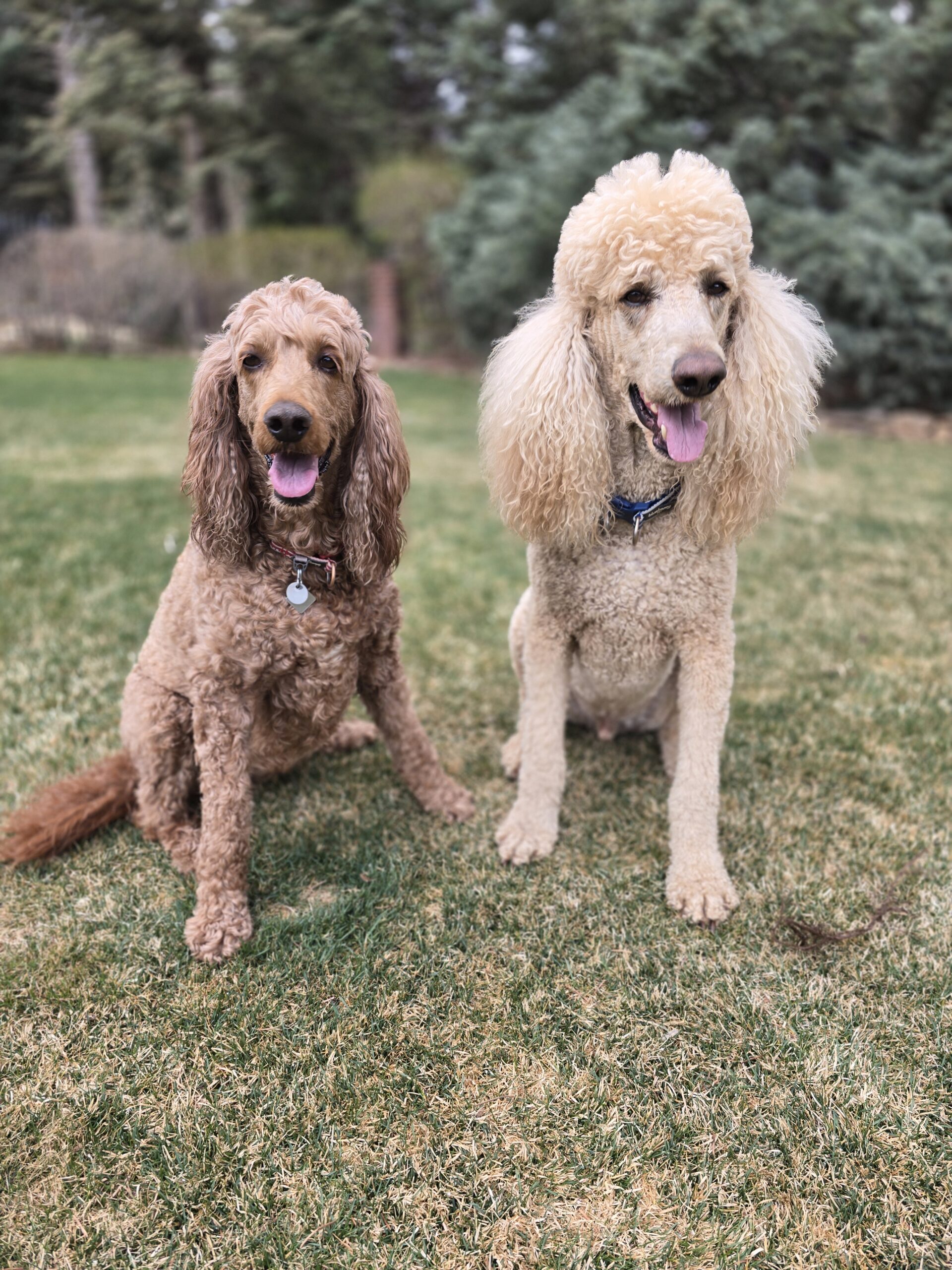
If you’ve ever found yourself standing in your living room, treats in one hand, clicker in the other, wondering why on earth you’re praising your dog for looking at you, congratulations — you’re doing it right.
Positive reinforcement may look simple (sometimes even silly), but it is by far the most effective, humane, and scientifically proven method to train dogs.
🐾 A Little About Me
I am a Certified Professional Dog Trainer – Knowledge Assessed (CPDT-KA). What does that alphabet soup mean? It means I’ve passed a rigorous and expensive exam covering learning theory, canine behavior, training techniques, and teaching people (because let’s be honest, humans are the tricky part). It also means I’m committed to continuing education and ethical, science-based training.
That credential isn’t just a sparkly feather in my cap. It means I stay up-to-date on the latest science, methods, and ethical standards. Your dog deserves more than outdated punishment myths and harsh tools — they deserve guidance that’s thoughtful and truly in their best interest.
🌟So Why Positive Reinforcement?
Positive reinforcement simply means adding something the dog finds rewarding to increase the likelihood of a behavior happening again. Think treats, toys, praise, sniff breaks — whatever floats your dog’s boat.
It’s not bribery. It’s clear communication. You’re saying, “That thing you just did? I love it. Here’s a cookie. Do it again!”
📚 The Science Bit
-
Dogs learn through association and consequences. Behaviors followed by something good are more likely to repeat (classical and operant conditioning at work).
-
Studies show that dogs trained with rewards have lower stress hormones (like cortisol) than dogs trained with aversive methods.
-
Reward-based training enhances the dog-human bond, builds trust, and actually changes brain chemistry — reinforcing calm, happy emotional states.
-
Positive reinforcement dogs show more optimism in cognitive bias tests, meaning they literally see the world more positively.
🐶 Why I Prefer Positive Methods Over Corrections and Harsh Tools
I don’t use choke chains, prong collars, shock collars, leash pops, or alpha rolls. Full stop.
Why? Because:
-
Punishment increases anxiety and can suppress behaviors without addressing the underlying emotion (leading to worse problems later).
-
Dogs trained with aversives often develop fear-based associations (your dog stops barking at the mailman, not because they’re calm, but because they’re terrified of the consequence if they do).
-
It damages trust. If your dog doesn’t trust you, training becomes about avoiding pain — not joyfully learning.
💡 Yes, It Might Take Longer — But the Payoff Is Huge
Can punishment stop a behavior quickly? Sure. But it’s like using duct tape on a leaking pipe. It covers the symptom, not the cause.
With positive reinforcement, it sometimes takes longer to reach certain goals, but your results are built on a foundation of trust, understanding, and real problem-solving. Your dog learns what TO DO, not just what not to do. And that means fewer relapses, happier dogs, and calmer households.
🎉 How Dogs Actually Make Training Fun
Dogs love to make their family happy. It’s literally in their wiring — your joy, tone, and energy become their rewards, alongside treats and toys.
Training turns into a game. Sessions become short, snappy bursts of problem-solving and creativity. Your dog’s tail wags faster, and you’ll see that moment when they get it — ears perked, eyes bright, proud of themselves.
Want examples?
-
Dog jumping on guests?
We teach them that sitting politely gets all the treats and affection, turning chaotic greetings into calm ones. -
Pulling your arm off on walks?
We reward loose-leash moments so your dog learns that staying close is where the good stuff happens (and your shoulders stay intact). -
Reactivity on leash?
We show them that seeing their triggers makes tasty snacks appear, gradually changing how they feel about those scary or exciting situations. -
Dog can’t settle during dinner parties?
By reinforcing calm on a mat, they start to choose relaxation all on their own. -
Too much energy or easily distracted?
Teaching tricks like spin or high-five burns mental energy, builds focus, and becomes your go-to party trick. -
Worried about recall or polite walking?
Even something as simple as teaching “touch” becomes the groundwork for coming when called, better leash manners, and polite hellos.
❤️ Bottom Line: Training is a Loving Relationship
When you use positive reinforcement, you’re not just building behaviors — you’re building a bond. Your dog learns that coming to you is always safe, that trying new things earns rewards, and that you’re a team.
It’s not about having a perfectly obedient dog who follows commands out of fear. It’s about having a dog who trusts you, feels safe with you, and delights in learning with you.